Textile / Feltmaking Artist~ Susan Mulcock
This week inside my membership we got to meet Susan Mulcock. Read below to learn a little bit about this lovely lady's story.
If you are a member, you can check the replay out by clicking below and logging in at: https://hub.learnfelting.com
__________________________________________________________________________________
For around two decades, Sue has built a reputation as a deeply hands-on felt artist, best known for her wet‑felted landscape panels. Her journey into the fibre world has included spinning and dyeing, as well as her felt making, resulting in a lifelong relationship with fibre. Much of what makes her style so unique is that she is heavily involved in every stage of the making, even selecting the fibres herself! Read on to find out more...
From Art Student to Felt Artist
Susan originally went to art school in Bradford, but later started teaching primary school children and fell out of touch with her creative side for a while.
Before felt became her primary medium, Sue painted watercolour landscapes. Being close to the beautiful Yorkshire dales gave her much inspiration to work from and she would take the reference photos herself and then paint them.
Her first encounters with felt making came through a weekend workshop (a bag-making course), and it quickly turned into something more than a one-off technique. After a long career in primary-school teaching, moving to part-time and supply work gave her the opportunity to return to felt making, and she was hooked almost immediately.
Learning to Paint with Wool
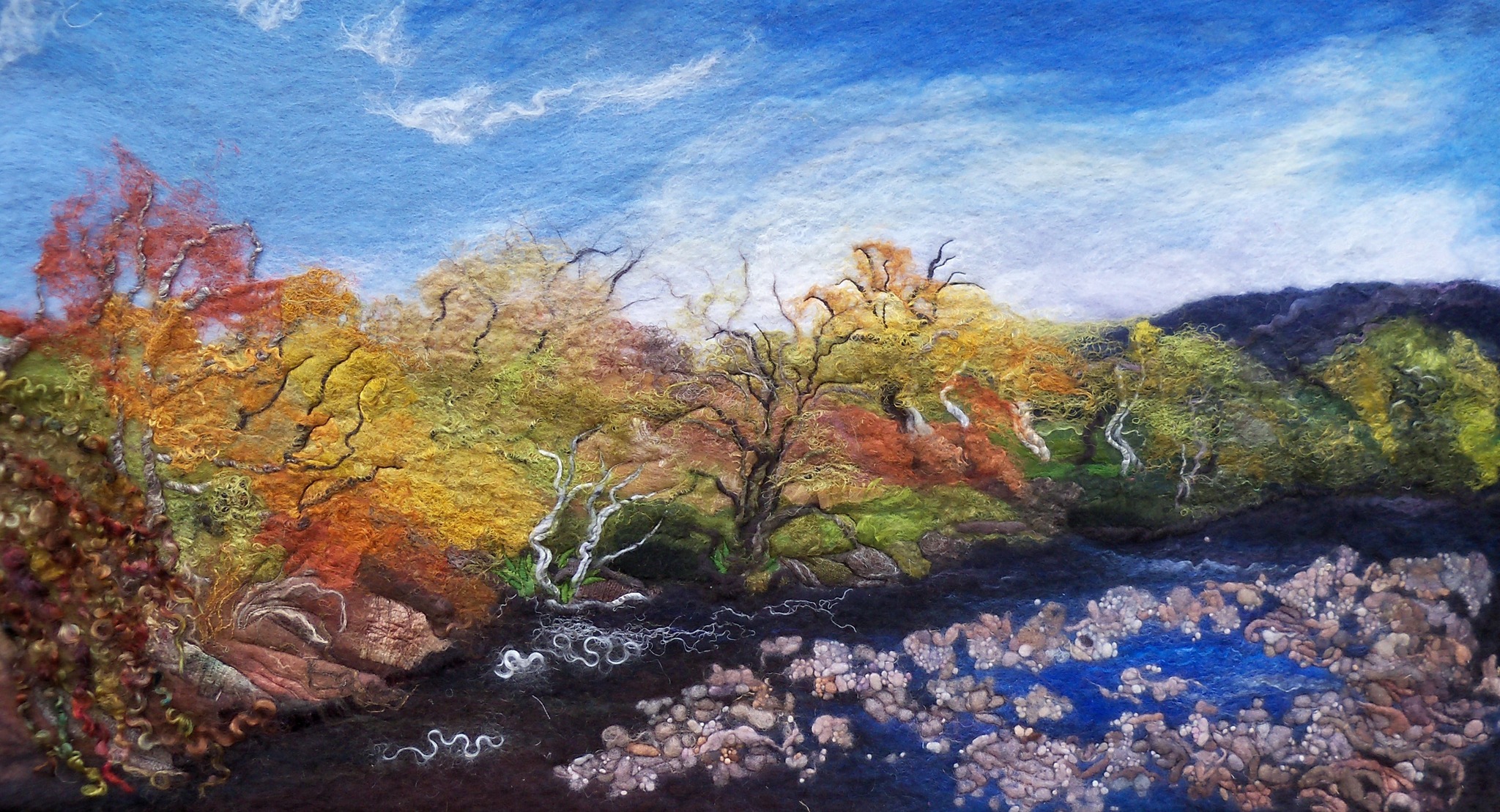
Sue’s landscapes are built using a back-to-front construction where depth is created through layering in stages. She first builds up the sky and distant tones, then adds atmosphere, and then in the final layer, she will add the foreground elements such as the trees, laying the fibres to follow the flow of the land.
She often pulls the fibre into small chunks to use like brushstrokes, and uses a variety of different types and textures of fibre, all of which she has dyed by hand to get the perfect colours for her pieces.
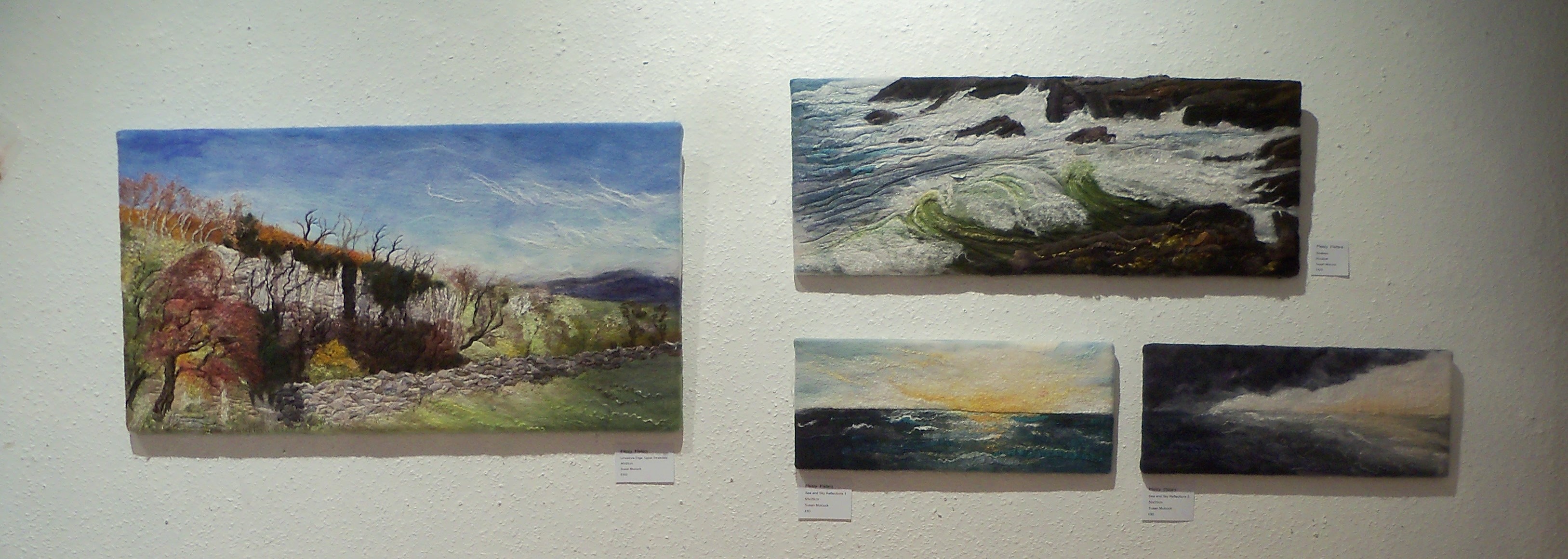
Light and texture are crucial to her sense of realism and mood. Sue creates her unique pictures bu contrasting matte, dense wool with lustrous fibres such as silk and mohair, creating highlights which lift and shimmer, mimicking the way light skims across water, rock, or distant rain.
She explained that wet felting is particularly well suited to landscapes because it naturally creates soft edges and layered depth, which is perfect for creating hills, skies, and the different shades which make up the atmosphere and sky.
Some of Sue's pieces on display:
Inspired by Landscape, Light and Nature
Landscape is at the heart of Sue’s work. All of her pieces are of places she knows intimately, these days often of the beautiful Shropshire countryside where she lives.
A defining feature of her work if the importance of an emotional connection to what she is working on, so she works exclusively from photos she has taken herself, feeling very strongly that this is a key element to her authenticity as an artist and her connection to the pieces. This helps her decide what matters: where the light falls, which colours feel true, what the weather felt like, and how the land should move across the surface.
Because of taking her own pictures, this has resulted in creating collections of pieces, where she has taken a series of photos at the same location, on the same day, such as exploring on a walk. She will also revisit the same locations at different times, and particularly loves getting a clear day when she can get the most vibrant skies and the light falls in just the right way.
Creating her Palette
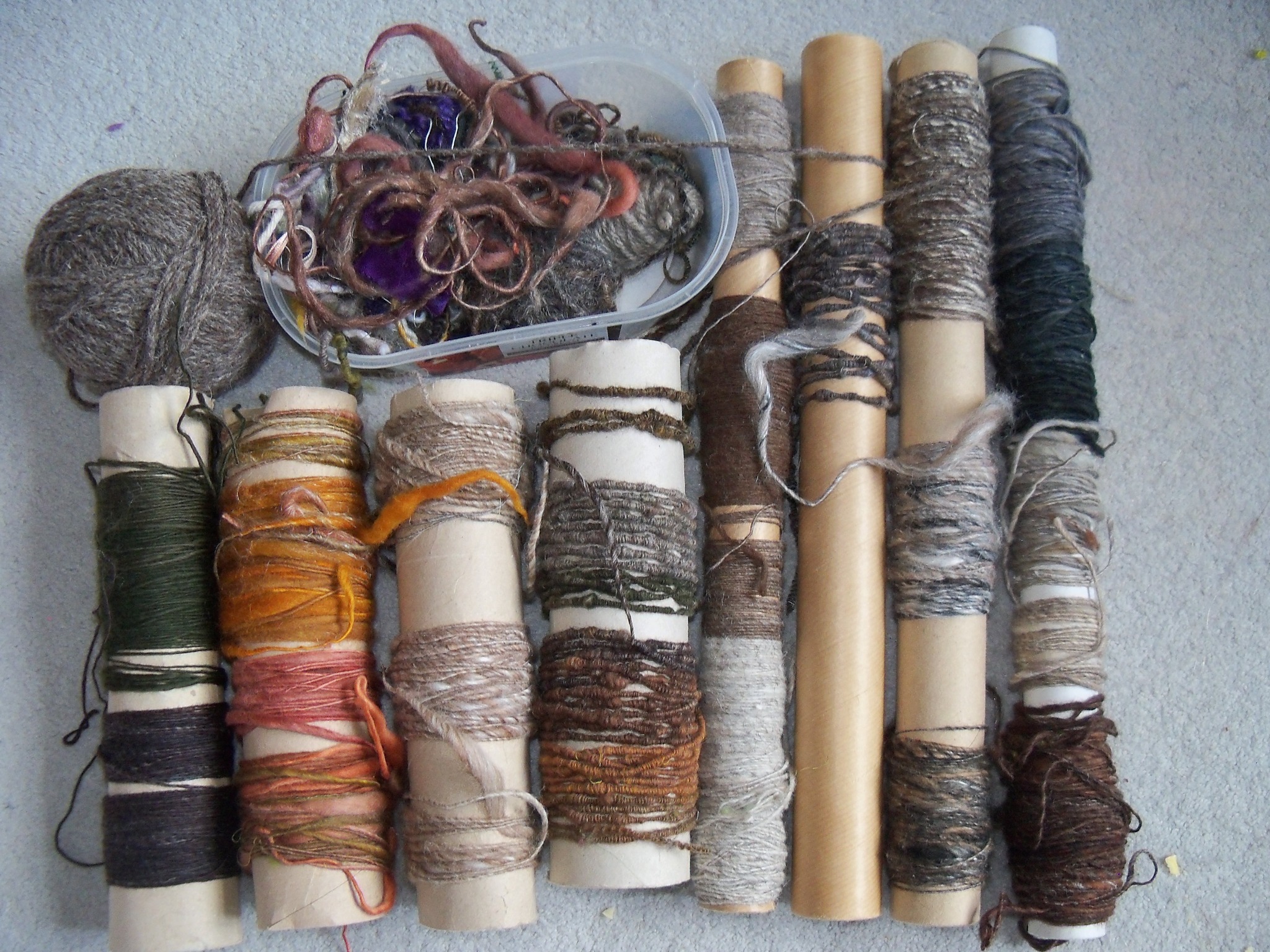
Creating collections supports her creative thinking and fits neatly with her dye practice, allowing her to batch dye a suitable colour palette which she can reuse across multiple panels. She carefully looks at the colours she is going to need in her pieces and then dyes her fibres all together.
Some of Sue's dyed fibre:
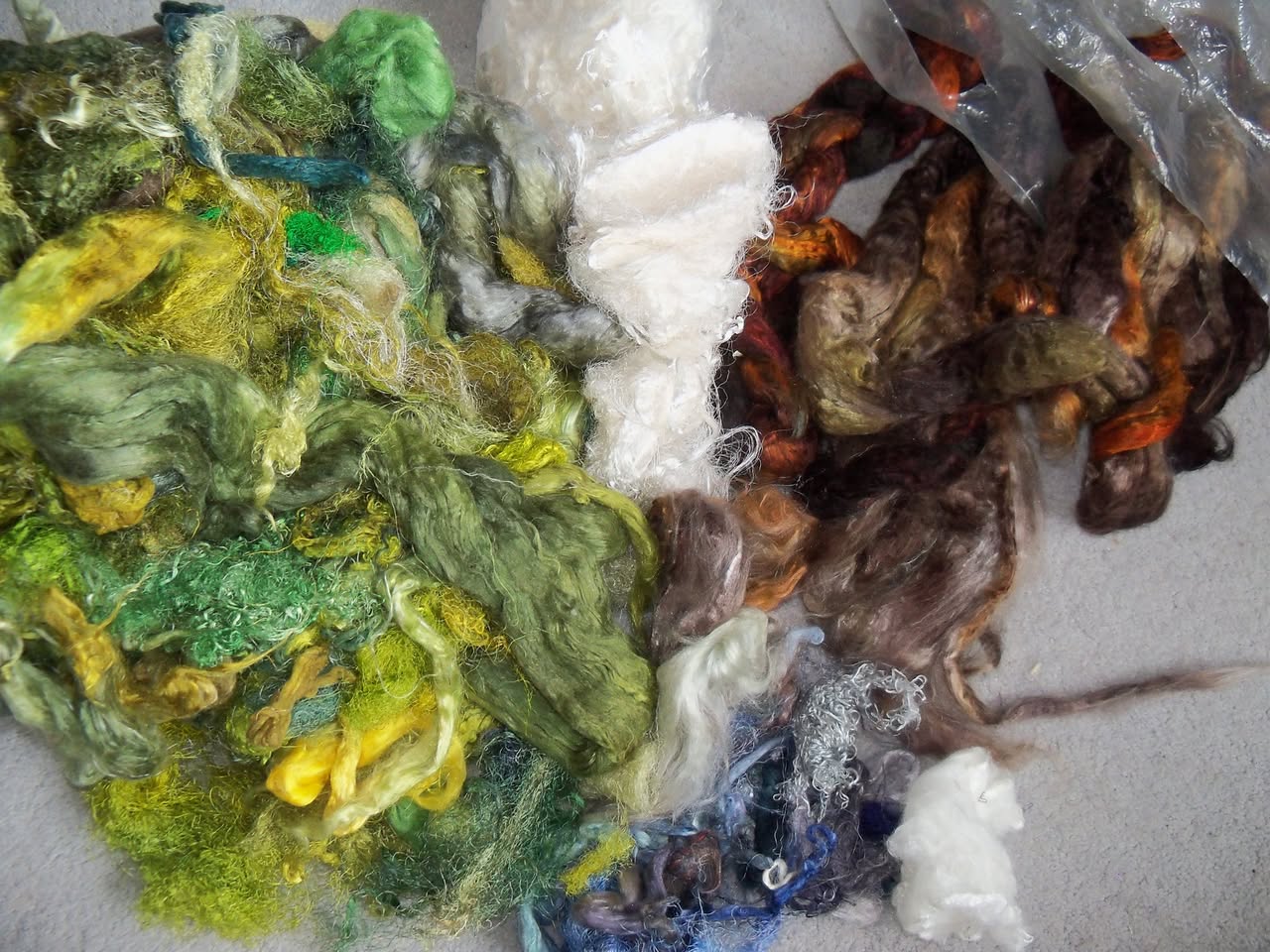
Although messy and time consuming, Sue feels the need to continue dyeing her own fibres because it ensures she won't run into difficulties such as dyed fibres that bleed through her work, and she can match the exact colours she needs for each project. I think this is something all fibre artists can appreciate- how difficult getting the exact shades you need can be, so I can understand where she is coming from. I may even give it a go myself, especially as Sue dyes her fibre in the microwave which doesn't sound as daunting as some other methods.
Sue also spins her own fibre. Here are some below:
Using the fibre
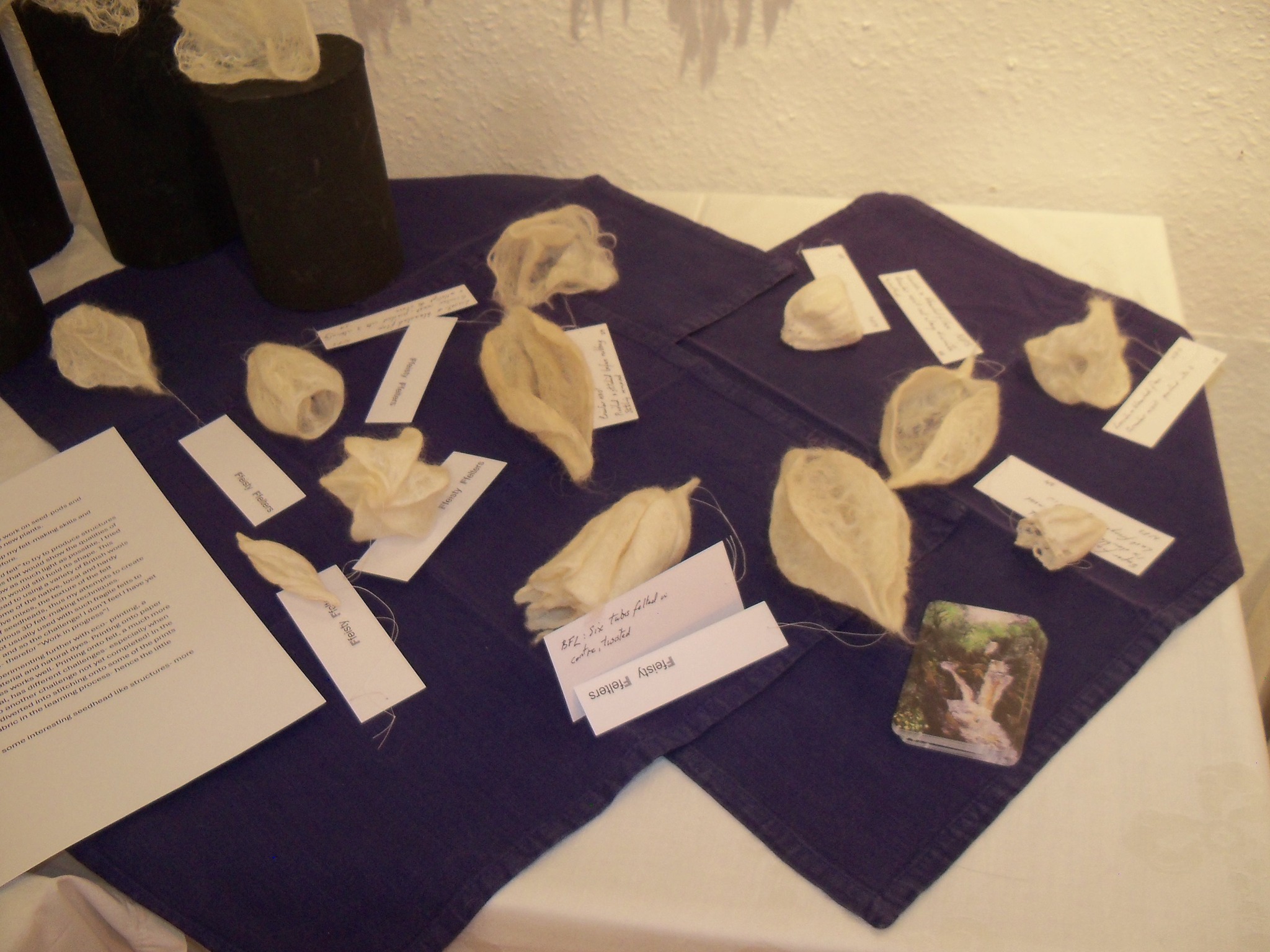
Alongside larger panels, Sue also makes some extremely detailed sculptural forms, including small, fiddly seed-heads that demand patience and a lot of control and very delicate pieces of fibre. Here are some of the more delicate pieces on display:
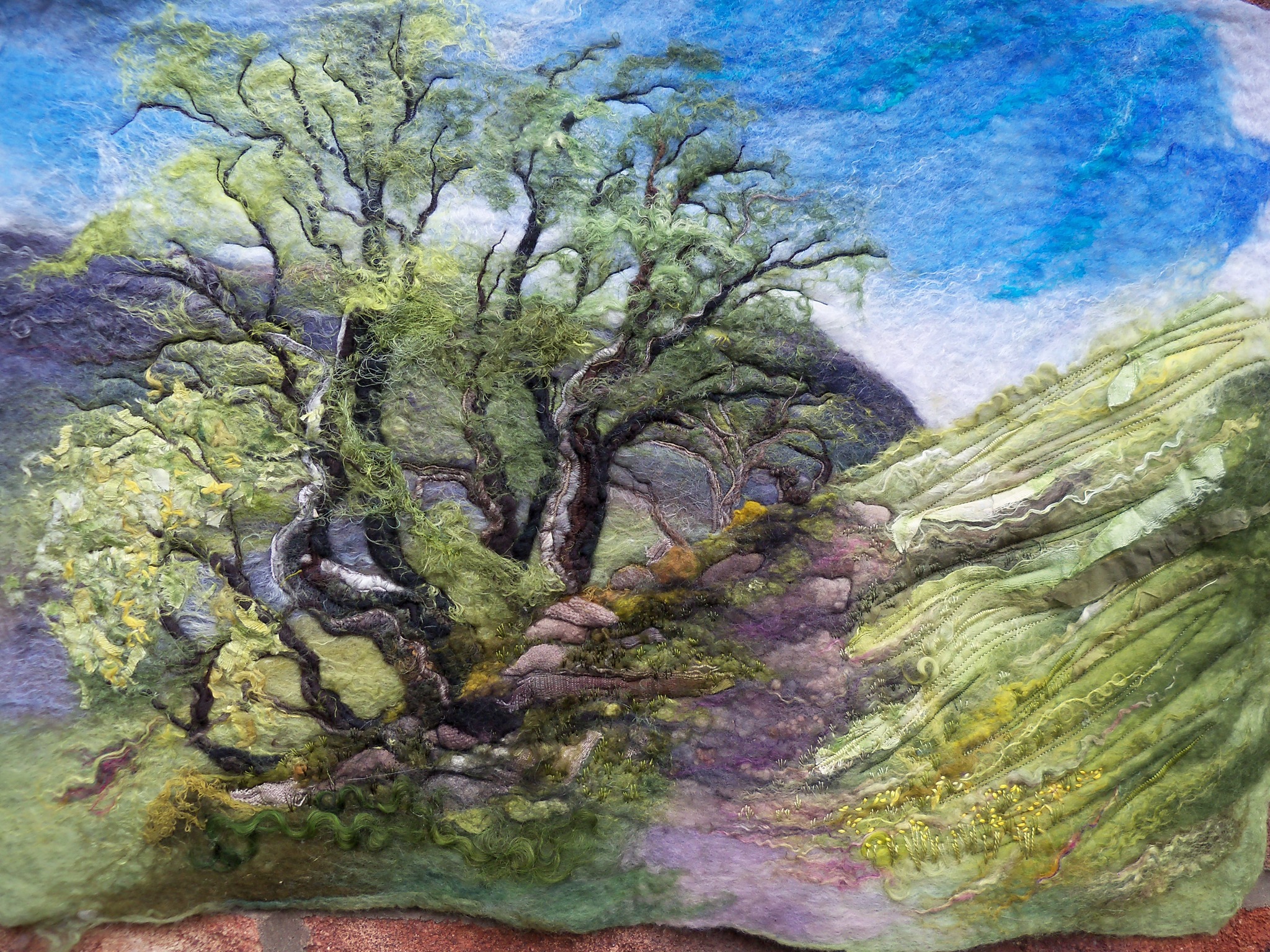
Texture is one of her great tools, and she builds it in multiple ways:
Spun wool for raised trees, and tactile foreground textures
Silks and sari silk for glints and sparkle
Tweed and furnishing offcuts for cliffs, dry-stone walls, and tonal depth—often over-dyed to harmonise with her palette
Hand and machine stitching / quilting to create lines and foreground detail and added texture
One of Susan's pieces: you can see the different textures she has cleverly used.
Teaching, Workshops and Sharing the Craft
Teaching has been a major thread throughout Sue’s life, and she continues to enjoy sharing skills with adults through workshops, often spanning 2 days over the weekend in a local art gallery, which also displays and sells her pieces. Sue encourages her students to develop their own style, rather than simply copying the teacher's work.
She’s also passionate about the wellbeing and community aspects of making. Her long-standing membership in Ffeisty Ffelters- a lively group that meets monthly, has played a key role in her own development. The group’s culture of show and tell, critique, problem-solving, and mutual encouragement is a reminder that textile practice doesn’t have to be solitary. Better still, the mix of disciplines within the group such as wet felting, needle felting, printing and geometric work, creates creative inspiration, whilst keeping their own individual style.
Words of Wisdom from Sue
Sue’s advice to beginners is to be a part of a creative community such as a local group to learn alongside others, because shared knowledge accelerates growth. She suggests to learn by doing, not by simply trying to copy a particular style.
As regards to dying fibres, she recommends testing to reduce dye bleeding, especially recycled sari silks and pre-dyed fibres. Patch testing and thorough rinsing can save a major piece!
She also advised to check colours in natural daylight before finishing, because indoor lighting can make colours look completely different! This is sooooo true. Before getting a daylight lamp, I would find I'd work on a piece in the evening and the next morning in daylight I realised the colours were completely different!
Felting, in Sue’s hands, becomes a way not just to depict landscape, but to hold memory, light, and atmosphere in a material you can touch! I hope she has inspired you to give it a go!
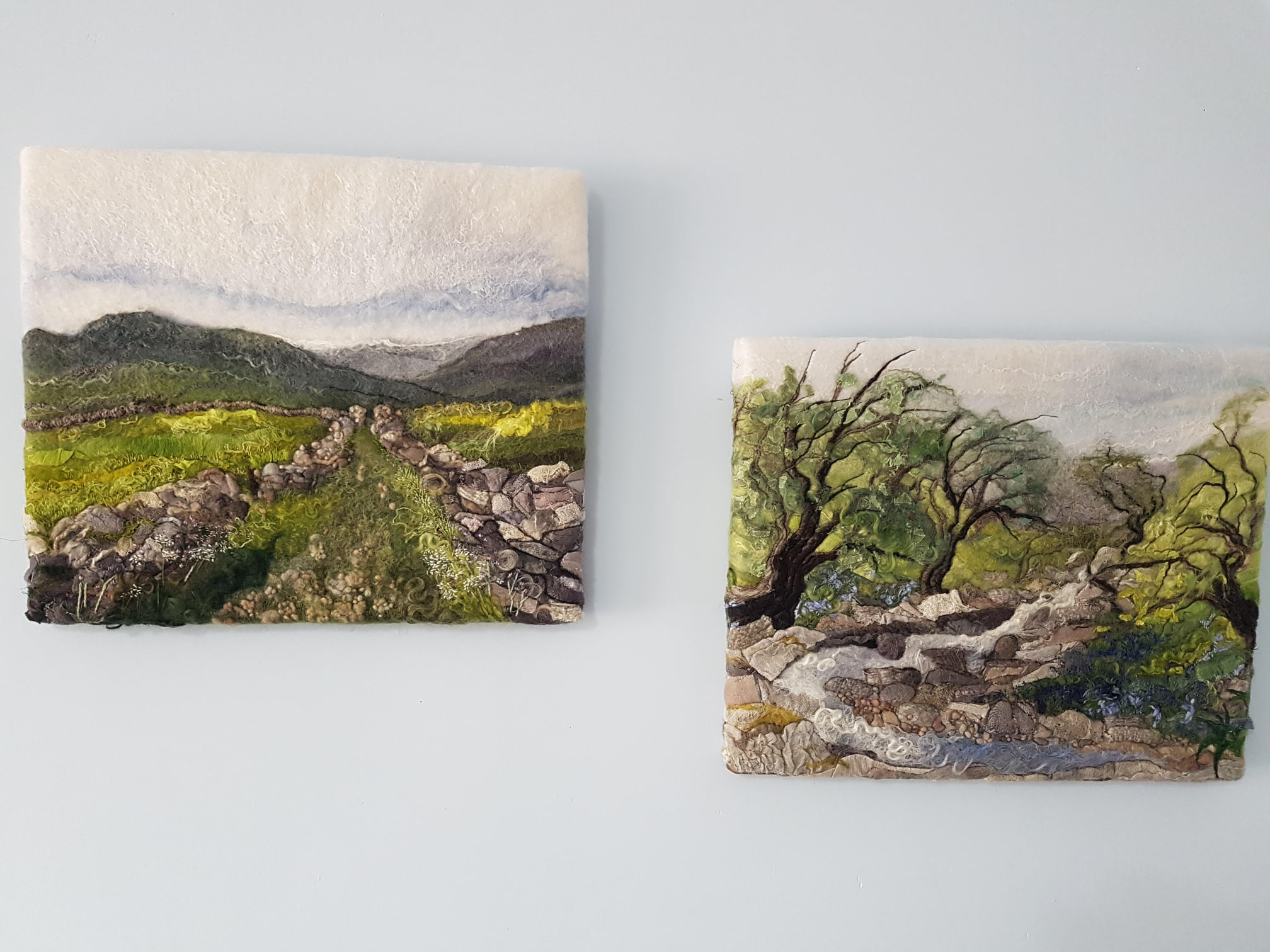
A couple more of Sue's beautiful original pieces:
Perfectionist Mindset
In her own critical reflection, Sue noted that her earlier work was often more adventurous in colour and freedom, while her later work has become increasingly fiddly and structured. As artists, we are always our own harshest critic and this can lead to a perfectionist mindset, which is something I can relate to, and struggle with frequently.
For all of us, I feel it is important to mix things up in our art from time to time so we do not feel stuck or pressured to create just because we feel we 'have to', but rather to explore and see which direction our creativity takes us. This is something I have to continue reminding myself of, because without it, we can end up losing our joy in our work, and then the amazing therapeutic benefits which felting (in fact any type of art) can bring, can be lost.
Sue's work is so unique and beautiful, and I hope she is able to bring back some of her earlier energy and freedom to continue to enjoy her creative process, while keeping the depth of skill she now has. I think we will all look forward to seeing her next pieces.
Thank you once again for sharing your story with us Sue. We really enjoyed meeting you! Don't forget you can discover more of Sue’s work and follow her creative journey via her Facebook or instagram page, where she regularly shares new pieces, and provides workshop updates:
Facebook: https://www.facebook.com/SusanMulcock
Instagram: https://www.instagram.com/sue.mulcockfelt
